

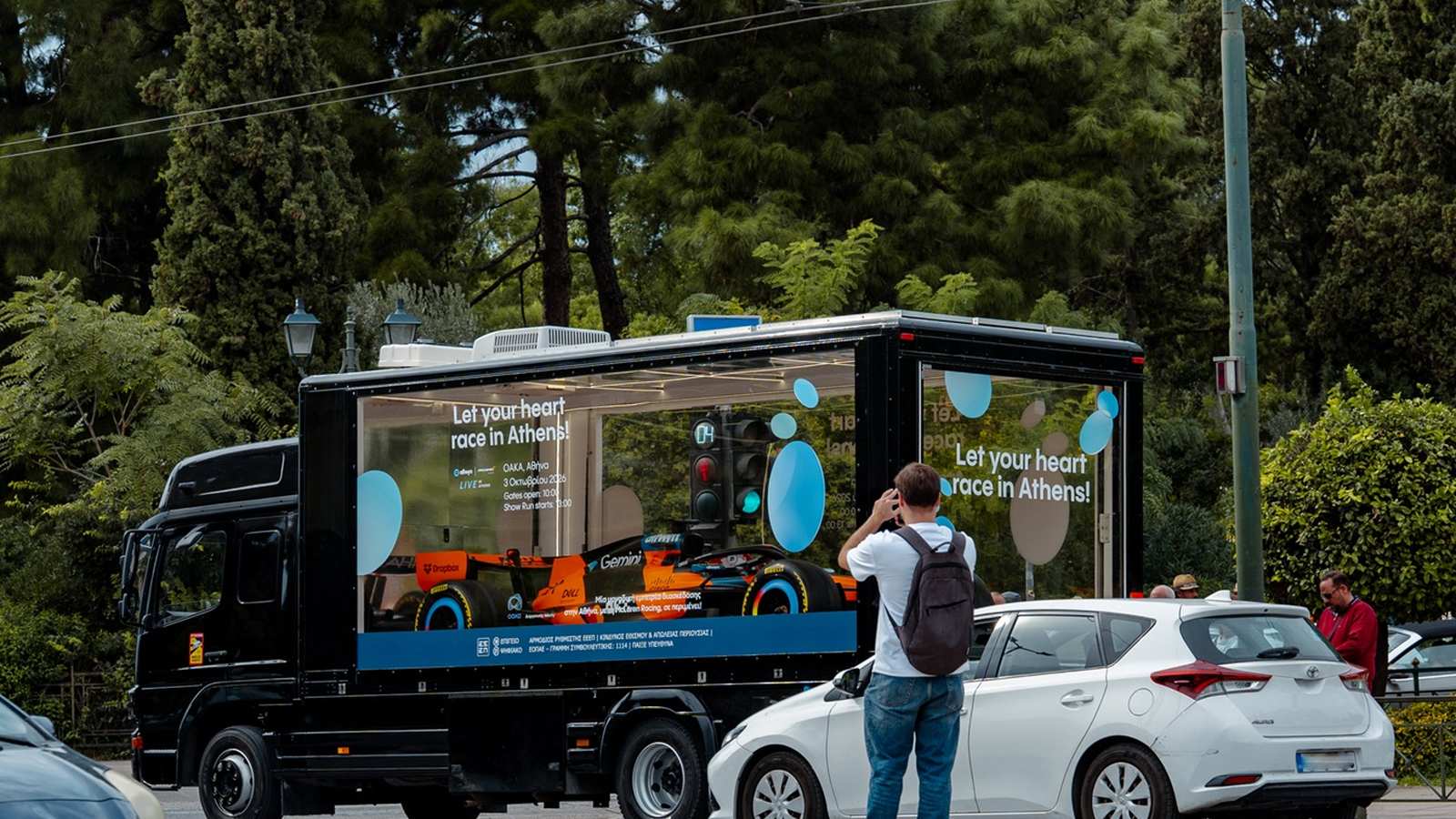

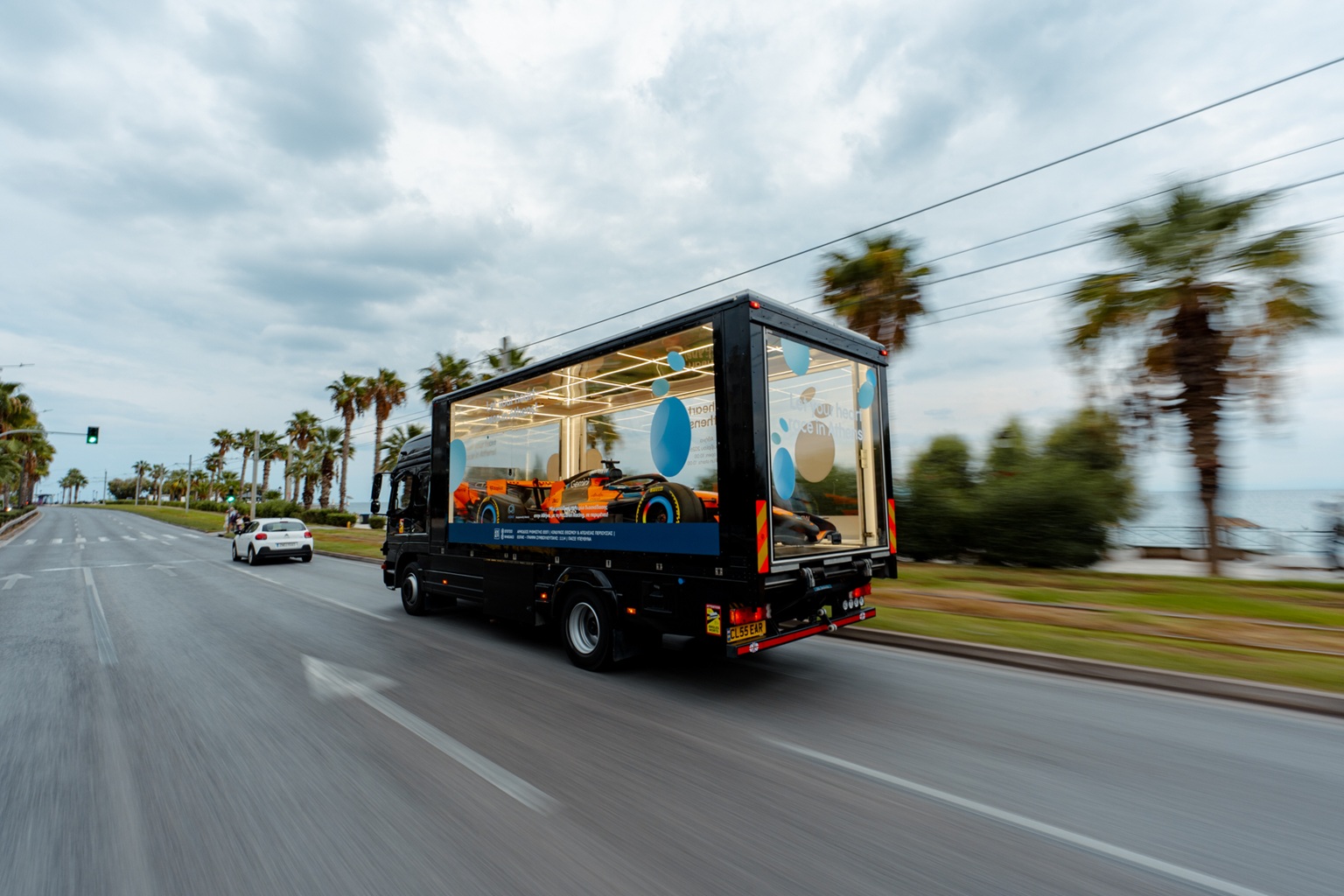
In Athens, we’re used to seeing expensive cars—Porsches, Ferraris, and Bentleys with tinted windows and drivers who make sure they’re noticed. But we’d never seen a McLaren single-seater weave its way through taxis, buses, and reckless mopeds, briefly bringing the atmosphere of Formula 1 to the …spacious streets of Athens.
An initiative by Allwyn gave driver friends the opportunity to enjoy McLaren Racing’s MCL40 show car, which traveled 126 kilometers on the streets of the capital.
The Man Behind the Legend
Bruce McLaren was born in 1937 in Auckland, New Zealand. At age 22, he won the 1959 U.S. Grand Prix, setting a record at the time as the youngest winner of a Formula 1 race. He was an exceptional driver, engineer, designer, and individual with an almost obsessive desire to understand how a car could be improved.
In 1963, he founded his own racing team, and in 1966, McLaren made its debut in Formula 1. Two years later, he won the Belgian Grand Prix, giving the team its first victory.
His life came to a tragic end in 1970, when he was killed during a race car test at Goodwood. He was only 32 years old.

Senna, Prost, and the Golden Age of Formula 1
In the decades that followed, McLaren became one of the most important names in the history of motorsports. Emerson Fittipaldi, James Hunt, Niki Lauda, Alain Prost, Ayrton Senna, Mika Häkkinen, and Lewis Hamilton have all driven for the team, each leaving their own mark.
The rivalry between Senna and Prost remains one of the most thrilling stories in the history of Formula 1. Two completely different personalities, two drivers of immense talent, and a team that found itself at the center of an era when the races took on almost mythical proportions.
Senna won three world championships with McLaren, in 1988, 1990, and 1991. The team’s name became synonymous with speed, technological superiority, and racing excellence.
The McLaren F1
In 1992, a car was unveiled that is still considered one of the automotive industry’s most significant creations. The McLaren F1, designed by Gordon Murray, was not created to impress with a long list of features. It was created to be the best possible road car.
Three seats inside, with the driver in the center, extensive use of carbon fiber, and an atmospheric BMW V12 engine producing 627 horsepower. In 1998, it reached 386.4 kilometers per hour, setting a speed record at the time for a production car with a naturally aspirated engine.
In 1995, the F1 GTR race car won the 24 Hours of Le Mans on its first attempt. A car designed for the road managed to prevail in one of the toughest endurance races in the world.
McLaren by the Numbers
15 out of 16 wins
In 1988, the McLaren MP4/4 won 15 of the 16 Grand Prix races that year. It was one of the most dominant race cars ever built. Senna and Prost combined for 15 victories. Ayrton Senna remains the driver with the most wins in McLaren’s history: 35 Grand Prix. He is followed by Alain Prost with 30, Lewis Hamilton with 21, and Mika Häkkinen with 20.
Just 106 cars
This is the total number of McLaren F1s ever produced. The highest sale price was $20.5 million.
4 out of the top 5 positions
At the 1995 24 Hours of Le Mans, the McLaren F1 GTR claimed victory and took four of the top five spots. It was the team’s first appearance in the race.
386.4 km/h
The top speed achieved by the McLaren F1 in 1998, which set a world record for a production car at the time.
More than 500,000 kilometers
That is roughly the total distance McLaren has covered in Formula 1 race laps from 1966 to 2026. It is equivalent to more than the distance from Earth to the Moon.
It took McLaren 63 years to reach 206 Formula 1 victories. But it took just 106 cars to create one of the greatest legends in automotive history.

