

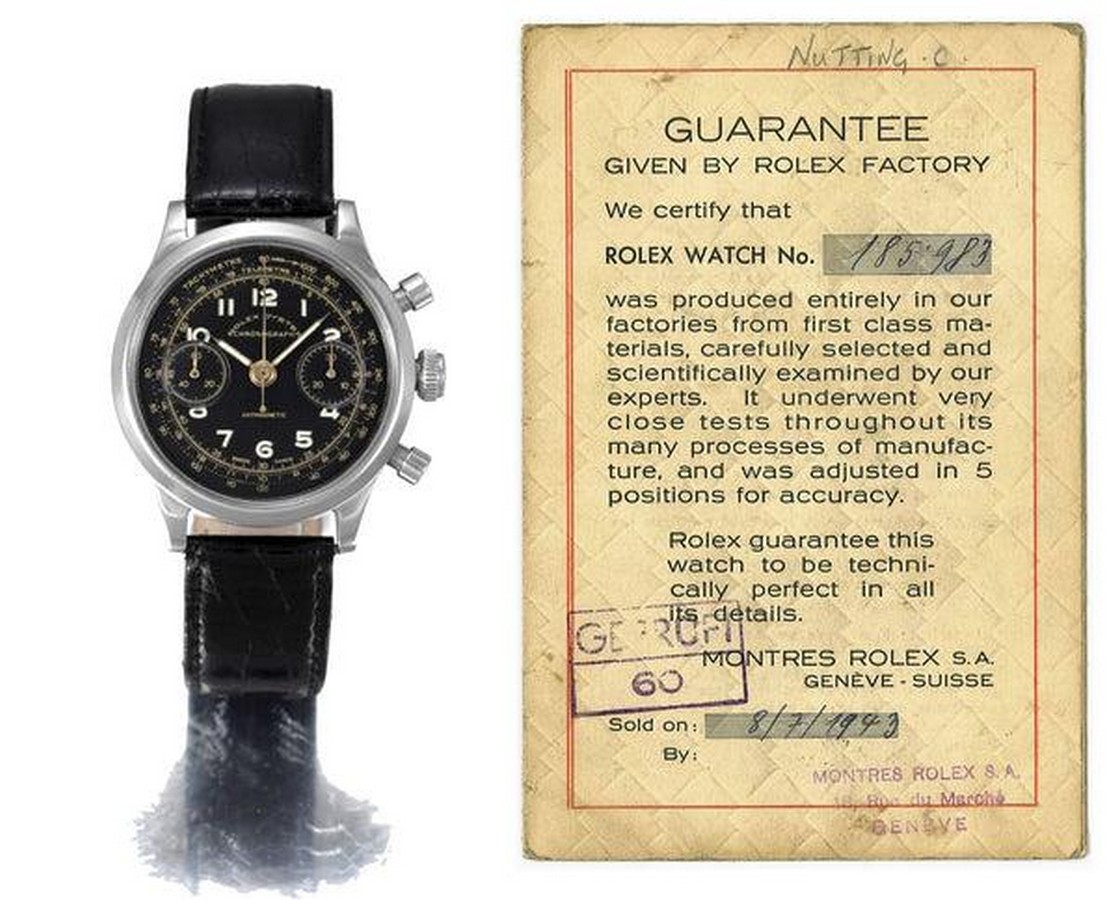

In March 1943, a British corporal sent a letter from a German prisoner-of-war camp. He wasn’t asking to be released, nor was he asking for food or special treatment. He wanted to buy a Rolex.
Clive James Nutting was at Stalag Luft III, a Luftwaffe prisoner-of-war camp in Silesia, in what was then occupied Poland. He had been captured by the Germans in 1940, during the campaign in France, and had already spent three years behind barbed wire. He worked as a shoemaker in the camp and had managed to save a small amount of money.
On March 10, 1943, he placed an order with Rolex for a stainless steel Oyster Chronograph. This was not just a simple watch that would help him keep track of the hours of his captivity. It was an expensive, technically advanced chronometer for its time, with a black dial, a chronograph, and measurement scales.
The reply he received was unusual. It was signed by Hans Wilsdorf, the founder of Rolex.
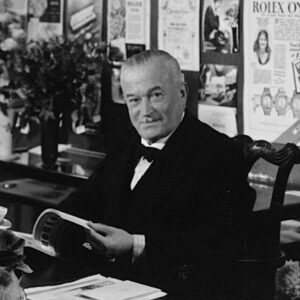
Wilsdorf confirmed the order and informed Nutting that he would have to wait due to the large number of orders. In the same letter, he gave him a directive that one would hardly expect from a luxury watch company to a prisoner of war: not to even think about payment during the war.
The watch arrived at the camp in July 1943. In the accompanying documents, its value was listed as “free,” marked “gratis.” Rolex had sent an expensive product to a man who was in enemy hands, deferring payment until the end of the war.
The story could simply be yet another example of corporate generosity. Stalag Luft III, however, was no ordinary camp. It was there that the famous Great Escape would be organized, an event that went down in history as one of the most daring prisoner escape operations of World War II.
Nutting was not merely a prisoner waiting for the war to end. He had already taken on an important role in camp life. As a shoemaker, he had access to tools and materials that could prove useful to those planning to escape. He helped make civilian shoes, belts, and briefcases for those who would attempt to get past the barbed wire fences.
In 1943, there had also been an earlier escape attempt involving the so-called “Wooden Horse,” a wooden gymnastics horse that was used as a cover for digging a tunnel. The prisoners carried the horse near the camp perimeter every day, and one prisoner hid inside it while digging beneath the ground. Nutting had participated in the operation, helping to remove the soil that came out of the tunnel.
A year later, on the night of March 24, 1944, 76 prisoners managed to escape from the camp through the Harry Tunnel. The escape had been planned in meticulous detail, with forged documents, civilian clothing, maps, compasses, and a network of people who had been working for months right under the noses of the German guards. The operation did not go as planned. Most of the escapees were captured, and 50 of them were executed on Hitler’s orders.
Nutting survived. The Rolex he had ordered from the camp was with him at a time when the concept of time had taken on a completely different meaning. Every day of captivity felt different. The time of the guard change, the duration of a patrol, the moment when one could move without being noticed, the wait for an escape that might restore his freedom.
I admit it is very tempting to write that the chronograph was used to time the Germans’ patrols or the time it took the escapees to pass through the tunnel. However, there is no historical evidence to support this.
In August 1945, after his liberation, Nutting contacted Wilsdorf again. The watch had kept time during his captivity, but now had a serious accuracy problem. He asked for it to be repaired and inquired how he could pay for it. Rolex replied that payment could be made when he was able to do so. The final amount was recorded in a letter dated March 23, 1948: 15 pounds, 12 shillings, and 6 pence.
This particular watch, with case number 185983, was preserved along with an extremely rare set of documents. The original order, the warranty, the receipt, correspondence with Wilsdorf, and Nutting’s personal items from the camp have allowed historians and collectors to piece together its history. In 2007, the Antiquorum auction house presented it in Geneva, with an estimate of 80,000 to 100,000 euros.
The story also reveals a lesser-known fact about Rolex at the time. The company had developed a practice of selling watches to prisoners of war, allowing them to pay after their release. The orders came mainly from British officers, who had the means to purchase such a product. Wilsdorf, who was born in Germany and based in Switzerland, chose to support this practice at a time when the Swiss watch industry was under enormous financial pressure.
The move certainly had a business aspect as well. Rolex watches were put to the test under difficult conditions, and prisoners of war returning to their homelands could potentially become the brand’s best ambassadors. Placing trust in a customer who could not pay at that moment was both a gesture of humanity and a business decision with a long-term perspective.
Clive Nutting died in Australia in 2001, at the age of 90. His watch had survived the war, the prison camp, and the historic escape that made Stalag Luft III famous.
For a product that today symbolizes financial success and social status, the story of this Rolex evokes a different relationship with value. In a prisoner-of-war camp, a watch was not merely a piece of jewelry or a sign of wealth. It was an object that could offer a small sense of normalcy in a world where almost everything had been taken away from a person.
The Elitist

