

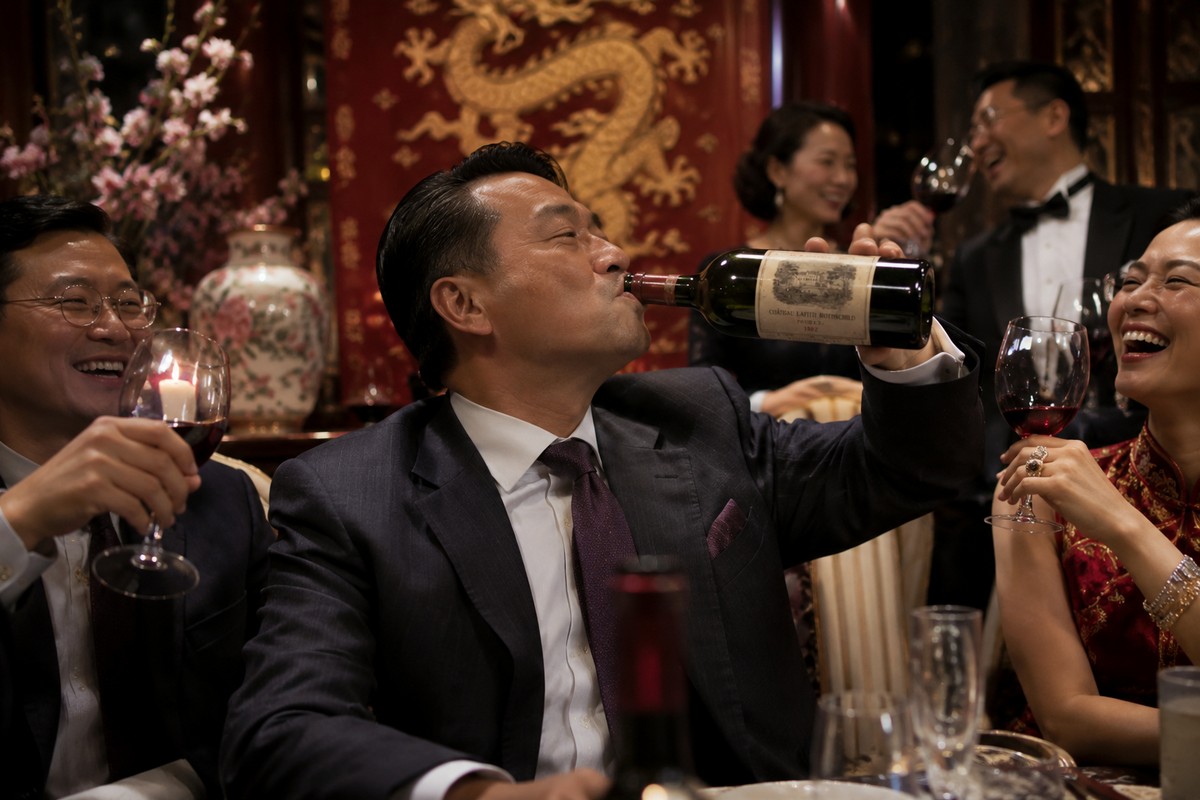

For several years, China has been one of the most paradoxical markets in the global wine industry. The rise of a new economic elite created an insatiable thirst for fine French wines. Among them, one name stood out: Château Lafite Rothschild.
Demand skyrocketed so quickly that the numbers began to diverge from reality. According to data published in a scientific study on the wine market in China, in 2011, Domaines Barons de Rothschild exported approximately 200,000 bottles of Château Lafite Rothschild to the Chinese market. However, estimates of the number of bottles appearing to be sold there reached 600,000. In other words, the market appeared to be consuming three times the amount that had actually been imported.
The counterfeit Lafite industry
The methods varied. In some cases, empty authentic bottles from well-known châteaux were collected by middlemen, refilled with cheaper wine, and made to look like an extremely expensive product once again. In others, counterfeiters manufactured entirely fake bottles, with labels, capsules, corks, and packaging that mimicked the originals.
In 2012, the Los Angeles Times described an entire small market for collecting empty Lafite bottles. One dealer offered up to $320 for an empty authentic bottle, depending on the vintage. The bottle had acquired its own commercial value, regardless of the wine it once contained. The same newspaper also recorded a telling observation by a Chinese wine consultant at the time: many buyers were more interested in the label than in the taste.
The situation became even more absurd when the counterfeits went beyond mere outward appearance. In one of the well-known cases uncovered by Chinese authorities, producers used cheap wine and added ingredients such as citric acid, flavoring agents, and colorants to create a product that could be passed off as imported French wine.
In 2015, a Chinese company had set up a full-scale production line for counterfeits. It purchased counterfeit bottles, labels, caps, and cheap wine, which it bottled as Lafite, Penfolds, Mouton, and other well-known labels. The operation had established a comprehensive production and distribution chain. Its leader was sentenced to four years and six months in prison.
The Wine That Didn’t Exist
Counterfeiting wasn’t limited to everyday consumption. In the world of collectors and investors, an even more lucrative form of fraud emerged: wines that had never been bottled by their producer but were marketed as rare vintage vintages.
A prime example is the case of Rudy Kurniawan, one of the most notorious wine counterfeiters in history. Kurniawan had managed to infiltrate the most exclusive circles of collectors, participate in multimillion-dollar auctions, and sell rare bottles from supposedly historic vintages. In 2013, he was convicted in the U.S. of wine fraud and forgery. His case revealed just how vulnerable even the market for the most expensive collectible bottles could be. In 2016, the documentary *Sour Grapes* was released, which presents a detailed account of this master fraudster’s story.

Can anyone tell if a wine is counterfeit?
The answer isn’t particularly reassuring. The authenticity of a fine wine cannot be determined by the bottle’s appearance or a quick taste test.
The proper procedure requires verification of origin, purchase documentation, ownership history, storage conditions, and packaging characteristics. Major producers have invested in certification systems and security technologies. Château Lafite, for example, has implemented specialized authentication technologies on its bottles.
Even so, the market for rare wines is not free from risk. Authenticity is a matter that requires documentation, not merely trust in the seller.
The Elitist

