


The quality of a whiskey isn’t always proportional to its price. However, it is always proportional to the aging process—the time the whiskey spends in the barrel, which is necessary for it to develop its character, complexity, and depth.
There are bottles that cost several hundred euros and are worth every penny. For example:
- Redbreast 27 Years: 550 to 600 euros
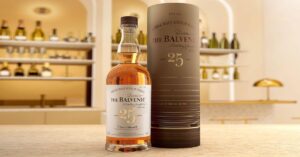
• Balvenie 25 Years Rare Marriages: 750 to 850 euros
• Highland Park 25 Years: 800 to 900 euros
• Glendronach 30 Years: 900 to 1,000 euros
However, there are also many other examples that, due to successful marketing or a large number of middlemen, are simply sold at very high prices without necessarily being worth it.
In the 40–60 euro range, however, we can find some excellent whiskeys: single malts, bourbons, Irish, and Japanese, each with a distinct character and philosophy. So these are Elitist’s 11 picks in this price range.
(The prices listed are approximate and apply to the Greek market. This last point is particularly significant when you consider that Hibiki 21 retails for 2,500 euros in Greece, 900 in Germany, and 600 in Japan…)
- Arran 10 Years
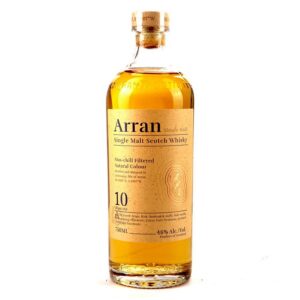
Single Malt Scotch Whisky
46% ABV
Arran 10 comes from the Isle of Arran and has a clean, fresh character, with notes of fruit, vanilla, light spices, and grains.The 46% alcohol content also gives it more body than many single malts in the same category. It is neither heavy nor smoky. However, it is complex enough to appeal to someone who has already begun exploring malt whiskey.
Price: approximately 46–50 euros.
- The Glenlivet 12 Years
Single Malt Scotch Whisky – Speyside
40% ABV
I discovered this whiskey in Seattle 15 years ago. Until then, I hadn’t seen it in Greece. It’s excellent for the price and, oddly enough, relatively unknown to the general public. It has the classic Speyside profile: pear, apple, fruit, vanilla, and a subtle sweetness. The whisky is light, clean, and balanced. It doesn’t try to be more complex than it is, and that’s precisely what makes it so valuable.
Price: about 47 euros.
- Roe & Co
Ireland
45% ABV
My favorite blended whiskey! I ordered it for a 25-year school reunion, and all my old classmates loved it. None of them had tried it before.
It belongs to the newer generation of Irish whiskey*, without straying from the category’s core philosophy. It’s a blend aged in bourbon barrels, with a profile that ranges from vanilla to ripe fruit, spices, and wood. It’s fuller-bodied than a typical, easy-drinking Irish whiskey and strong enough to stand on its own without any mixers. It doesn’t have the complexity of a great single malt because… it doesn’t need it.
*Whiskey—that’s how it’s spelled in Ireland and the U.S.
Price: 30–35 euros.
Cardhu 12 Years
Single Malt Scotch Whisky — Speyside
40% ABV
Cardhu occupies a peculiar position in the market. It’s well-known, found almost everywhere, yet it flies under the radar. I’ve noticed, however, that it has always been a favorite among elegant women who prefer to drink whiskey… Cardhu’s value lies in its balance. It doesn’t try to make a splash. It stays true to the classic Speyside style and does it justice. It’s a calm whiskey. And that’s not a drawback.
Price: 38–43 euros.
- Bushmills 10 Years
Single Malt Irish Whiskey – Ireland
40% ABV
Bushmills 10 is one of the classic Irish single malts. Triple distillation and aging in bourbon barrels result in a clean, smooth profile with notes of vanilla, honey, ripe fruit, and subtle wood.
Its strength lies in its balance: clean, fruity, with vanilla, honey, and subtle wood notes. A classic Irish single malt that is sure to surprise you. One of the most beloved in its category.
Price: approximately 32–37 euros.
- Glenfiddich 12 Years
Single Malt Scotch Whisky – Speyside
40% ABV
Glenfiddich 12 is perhaps one of the most recognizable single malts in the world. It must be among the first companies to understand the importance of marketing that emphasizes rarity. It was the first brand to open an exclusive store at Heathrow in 1993, where it sold a 50-year-old bottle for 3,000 pounds—a price that, at the time, seemed anywhere from excessive to ridiculous.
The 12-year-old (as well as the 15-year-old) is a firm favorite; it offers notes of pear, apple, vanilla, light wood, and a clean, fruity finish—all of which make up this whisky, which is at the heart of the Speyside style.
Price: approximately 45–47 euros.
- Teeling Small Batch
Irish
46% ABV
Teeling represents the modern side of Irish whiskey. The Small Batch has more character than many of the classic entry-level options in the category. Sweet spices, dried fruit, vanilla, and wood take center stage, while the 46% alcohol content adds more intensity.It’s smooth enough to drink easily and robust enough not to get lost in the glass.
Price: 38–56 euros.
Edradour 10 Years
Single Malt Scotch Whisky – Highlands
40% ABV

Edradour is a different story. I love everything that comes out of this distillery, which is considered the most “arrogant” distillery in Scotland (call them about a business partnership, an order, or distribution, and they won’t even answer you!)
The distillery is small, and its production remains limited compared to the big names. The quality, however, is top-notch.
Edradour 10 is rich, full-bodied, and quite different from the lighter Speyside single malts. Nuts, ripe fruit, malt, sweet spices, and wood. Its body is heavier and its profile more traditional. There’s real character here.
This isn’t a whisky for someone who’s just looking for an easy drink. It’s a whiskey for those who want to explore what a small distillery can achieve when it doesn’t have to produce for the whole world.
Price: 55–60 euros.
- Laphroaig 10 Years
Single Malt Scotch Whisky — Islay
40% ABV
Laphroaig needs no introduction. Peat, smoke, iodine, saltiness, and a distinctly medicinal character. It’s one of those whiskies that has cultivated an entire following. King Charles’s favorite: In 2024, Laphroaig received a new Royal Warrant of Appointment from the king, confirming its status as an official supplier to the Royal Household. Charles and Queen Camilla announced the first Royal Warrants of the new reign that year. The awards were granted to companies that already held Royal Warrants when Charles was Prince of Wales, a position from which he had been granting such honors since 1980.

Laphroaig 10 is one of the purest examples of the Islay style and one of the whiskies that define what peat can mean in a glass.
If you’re not used to this style, your first taste might take you by surprise. But if you like it, you’ll hardly confuse it with anything else.
Price: 44–57 euros.
- Nikka From the Barrel
Japanese Whisky
51.4% ABV — 500 ml
Nikka From the Barrel is perhaps the most unique bottle on the list. First, because of its size: 500 ml instead of the usual 700. Second, because of its alcohol content: 51.4%. It definitely needs water. The high alcohol content isn’t there to impress. It’s part of the whisky’s structure and intensity. And finally, because of its character. It’s concentrated, full-bodied, and intense, with fruit, spices, wood, and a remarkable warmth. This isn’t a whiskey to be sipped in a hurry.
Price: 39–52 euros for 500 ml.
- Four Roses Small Batch
Kentucky Straight Bourbon — USA
45% ABV
This bourbon has its own sweetness, both literally and figuratively. I’ve tried quite a few because it’s my wife’s favorite drink (though she never drinks more than one, so I end up having to drink the second glass we usually order out of politeness. So I’ve tried quite a few. This particular, very respectable one offers notes of vanilla, caramel, oak, spices, and ripe fruit without becoming overly sweet or one-dimensional.
Its 45% ABV gives it enough intensity to be enjoyed neat and enough body for a proper Old Fashioned. It’s also a good reminder that the conversation about whiskey doesn’t end in Scotland. Bourbon has different raw materials, a different climate, a different tradition, and a different aging process. Four Roses is a solid introduction to the world of bourbon without requiring a higher budget.
Price: 40–42 euros.
Ultimately, price isn’t always indicative of quality.
Price is a useful filter. However, it is not the ultimate measure of quality. There are whiskeys that cost a lot and have little to offer. There are also bottles at perfectly reasonable prices that have character, history, craftsmanship, and personality. The point isn’t to buy expensive bottles. It’s to know what you’re buying. To recognize the difference between peat and smoke, wood and sweetness, body and intensity. To know why one whiskey is different from another and exactly what you’re paying for when the price jumps from 40 to 400 euros.

